What We Learned On Our Summer Break
CMA Summer Leadership Conference
Session Recap | The Data Advantage: Why Associations That Benchmark Win | Summer 2026
TAKEAWAY: Data is one of the most valuable assets that you have or can get. The opportunity is to turn more of it into market intelligence members can use, leaders can act on, and the industry can learn from.
Remember the September ritual? “What I Did This Summer,” three paragraphs, mandatory, due before recess. Every kid dreaded it. Every kid also had a good story to tell.
The HAI team spent part of our summer at the CMA Summer Leadership Conference, leading a session called, “The Data Advantage: Why Associations That Benchmark Win.” So, in the spirit of the assignment, here’s what we learned. Turns out, there was plenty worth writing about.
Show and Tell: You’re Richer Than You Think - Most associations are sitting on more than they realize: membership data, event participation, committee engagement, market intel, research, certification activity just to name a few. It’s a lot of “stuff.” That conversation identified a key sticking point. It’s not about having enough information. The real challenge is making sure associations have built both the right structure and the trust needed to turn what members already know into intelligence they can use.
Rich in data. Poor in insights. That’s the gap worth closing.
Making the Grade: Benchmarking’s Real Value - Ask any association member two questions and watch them lean in: “How am I doing compared to the overall industry?” and “What’s coming next that I need to know now?” That’s where benchmarking makes the difference: turning a static number into context. Not just what the number is, but what it means.
Done well, the benefits go both ways:
– Members get dashboards, peer comparisons, trend analysis, forecasting, and market intelligence they can use to make smarter decisions.
– Associations get sharper industry visibility, advocacy evidence, engagement intelligence, and an earlier read on disruption headed their way.
Report Cards, But for Data Maturity - No association needs to leap straight to a predictive analytics platform on Day One. Data maturity happens in stages, and each stage builds new capabilities:
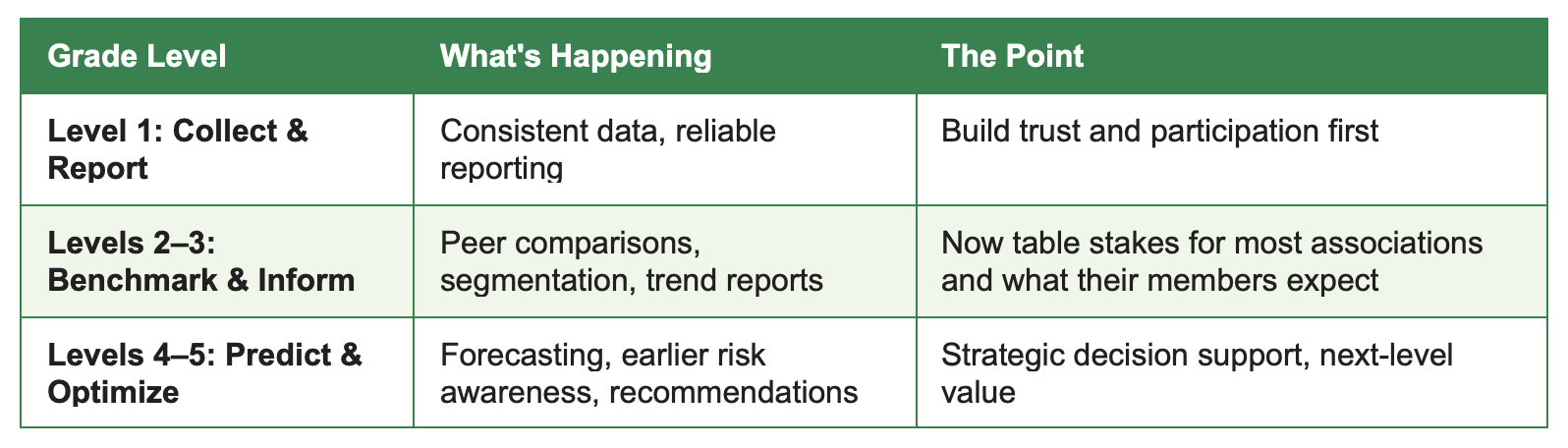
Progress can be achieved and measured, one level at a time.
AI Is the Amplifier, Not the Substitute - AI may look like a shortcut, but it isn’t. When the fundamentals and guardrails are solid, it can add real value with personalized insights, automated trend detection, and proactive alerts instead of yesterday’s report. But it only performs as well as the foundation underneath it of governance, standardization, and solid architecture.
Skip the foundation, and AI just amplifies the gaps.
Extra Credit: The Trust Question Everyone Asked - One of the most important questions came from the room, not the slides:
“How do we build member trust when they’re hesitant to share their own data?”
The answer can be simple. Start small with publicly available data that is meaningful to your industry, like economic indicators, public industry stats, workforce trends, sentiment surveys, regulatory tracking. This is low-hanging fruit that associations often already have or can easily get. Show members the value of it before asking for more. Put governance and confidentiality protections in place from Day One. Let trust and participation grow from there.
The best benchmarking programs aren’t launched. They’re built, one useful insight at a time.
WANT THE FULL STORY?
That’s the abridged (CliffsNotes for those old enough to remember) version. Interested in a deeper dive? Check out the presentation here or download it below.
Download the full resource here.